HR Technology & Trends
How to Choose the Best HRMS for Your Business
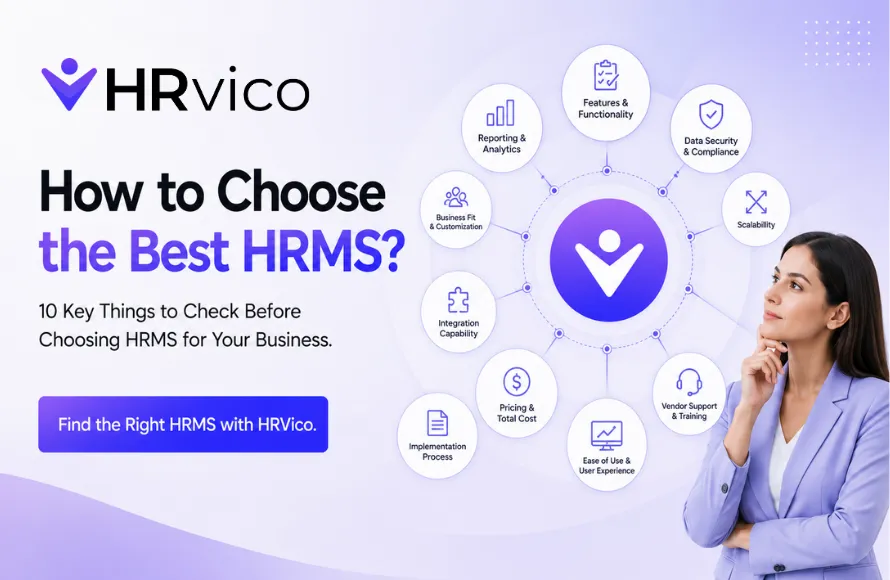
Choosing HRMS software isn't simply about finding the platform with the most features. The real question is: Will it actually make your HR team's work easier? As businesses grow, managing employee information through Excel sheets, emails and separate tools can become difficult. Attendance, leave, employee records, payroll and approvals may all require different processes, creating more administrative work for HR. A suitable HRMS software can bring these processes together and help businesses manage their workforce more efficiently. For businesses across Delhi NCR, including Noida, Greater Noida, Delhi, Ghaziabad, Gurugram and Faridabad, choosing the right HRMS can help create a more organized HR workflow. At HRVico, we believe HR technology should simplify work rather than make it more complicated. Before comparing HRMS providers, identify the problems you're trying to solve. Are you still managing attendance manually? Are leave requests coming through WhatsApp? Is employee information spread across different Excel files? Does HR spend too much time following up on approvals? If these problems sound familiar, an HRMS may help centralize your HR operations. The right system can help reduce repetitive administrative work while giving HR, managers and employees a more structured way to handle everyday processes. Start by identifying what your business actually needs. Make a list of the HR processes you currently manage and determine which ones are creating the most manual work. These may include: Employee management Attendance tracking Leave management Payroll Employee records Approvals HR reports Don't choose software simply because it offers dozens of features. Choose features that solve your actual business problems. An HRMS can have excellent features, but if HR and employees find it difficult to use, adoption can become a problem. Look for a platform with a simple interface and straightforward workflows. Employees should be able to perform routine actions without constantly asking HR for assistance. Make sure the HRMS supports the processes your business needs today. Depending on your requirements, important features may include: Employee management Attendance management Leave management Payroll management Approval workflows HR reports Employee self-service Also consider whether the platform can support additional HR requirements as your business grows. One of the main reasons businesses adopt HRMS software is to reduce repetitive HR work. Look for workflows that can automate routine activities such as leave requests, approvals, attendance tracking and employee updates. The goal isn't to automate everything. It's to reduce unnecessary manual effort. Your HR requirements today may not be the same six months or two years from now. If your business is growing, choose an HRMS that can support an increasing number of employees and evolving HR processes. A system that works for 20 employees but becomes difficult to manage at 100 employees may not be the right long-term choice. HR systems contain sensitive employee information, so security should be an important part of your evaluation. Before choosing an HRMS, understand how employee data is stored, protected and accessed. Also check whether the platform provides appropriate user permissions and access controls. HR teams and business owners often need quick access to workforce information. An HRMS should make relevant reports and employee data easier to access rather than forcing HR to manually combine information from multiple spreadsheets. Good reporting can help management make better-informed HR decisions. Don't evaluate the software only from the HR department's perspective. Employees and managers may also use the system for leave requests, approvals, attendance and other HR activities. A system that works well for everyone involved is more likely to be adopted successfully. Price shouldn't be the only deciding factor. Compare what is included in the plan, the available support, implementation process, feature limitations and potential additional costs. The cheapest HRMS isn't necessarily the most cost-effective option if it creates usability or operational problems later. Before making a final decision, take a product demo whenever possible. Ask the provider to show how the actual workflows work instead of only discussing features. Try to understand: How employees use the platform How managers approve requests How HR manages employee information How attendance and leave work What reports are available How easy the system is to navigate This gives you a much clearer idea of whether the HRMS fits your business. Businesses sometimes choose HRMS software based only on price or the number of features. Avoid choosing a system that: Is unnecessarily complicated Doesn't match your actual HR workflow Has poor user experience Doesn't scale with your business Makes employees dependent on HR for routine tasks Provides limited support The best HRMS is not necessarily the one with the longest feature list. It's the one that your team can actually use effectively. Your HR software should support your business—not create another administrative burden. For businesses in Noida, Greater Noida, Delhi, Gurugram, Ghaziabad and across Delhi NCR, a centralized HRMS can provide a more organized way to manage growing teams and everyday HR processes. HRVico helps businesses simplify HR management by bringing essential employee and HR processes into one centralized platform. If you're still managing HR through spreadsheets and disconnected tools, now may be the right time to explore a more structured approach. Explore HRVico and find a simpler way to manage your growing workforce.Why Does Your Business Need an HRMS?
1. Understand Your HR Requirements
2. Check Ease of Use
3. Look for Essential HR Features
4. Consider Automation
5. Check Scalability
6. Check Data Security
7. Evaluate Reporting & Insights
8. Consider Employee & Manager Experience
9. Compare Support and Pricing
10. Take a Demo Before Choosing
Common Mistakes to Avoid When Choosing HRMS Software
Choose an HRMS That Grows With Your Business