HR Automation
How HRMS Software Reduces HR Manual Work
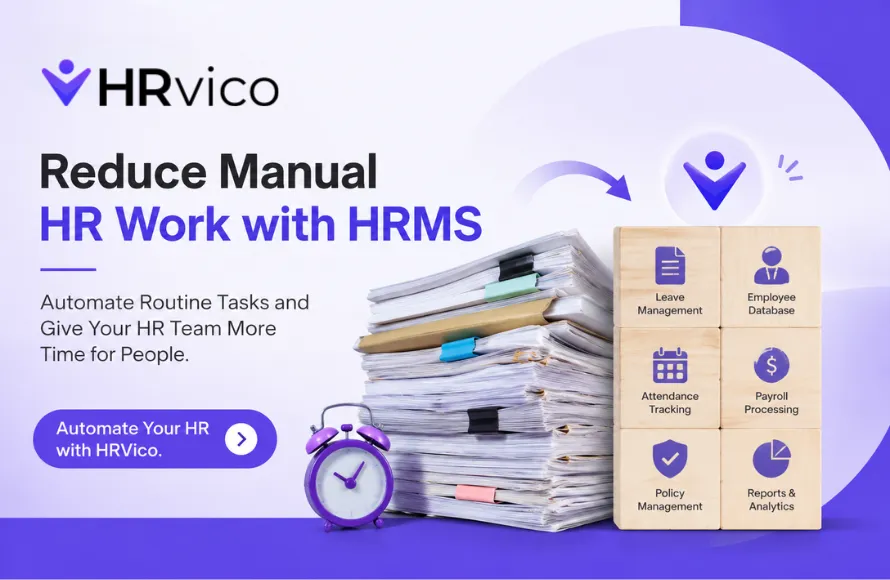
HR teams spend a significant amount of time handling repetitive administrative tasks. Updating employee records, checking attendance, processing leave requests, preparing reports and following up for approvals can take hours every week. For small teams, these tasks may be manageable through Excel and manual processes. But as a company grows, the same approach can become time-consuming and difficult to maintain. This is where HRMS software can help. An HRMS brings important HR processes into a centralized digital system, helping HR teams reduce repetitive work, improve data organization and spend more time on people-focused activities. HR manual work refers to repetitive tasks that require employees to enter, update, verify or manage information manually. Common examples include: ✓ Maintaining employee records When these activities are handled manually, even small errors can create additional work for HR. Instead of maintaining employee information across multiple spreadsheets and documents, HRMS software provides a centralized place to manage employee records. HR teams can access relevant employee information more easily without searching through different files. Manual attendance tracking can involve collecting records, updating spreadsheets and checking attendance regularly. An HRMS can digitize attendance management and make employee attendance information easier to track and manage. Managing leave through emails, messages or spreadsheets can create unnecessary follow-ups. With an HRMS, employees can submit leave requests digitally and managers can review and approve them through a structured workflow. This reduces the need for HR to manually coordinate every request. One of the biggest sources of manual HR work is repeatedly entering the same information. A centralized HR system helps reduce duplicate data entry by keeping employee information organized in one place. HR teams often spend time following up with managers for attendance corrections, leave requests and other approvals. Digital approval workflows make it easier to route requests to the right person and track their status. Preparing reports manually can involve collecting information from different spreadsheets and checking the data before sharing it. HRMS software can organize HR data in a structured format, making it easier to access information and generate useful reports. HR does not need to handle every small employee request manually. Depending on the HRMS features, employees may be able to access their information, submit requests and check relevant HR details themselves. This reduces the administrative workload on HR teams. Excel can be useful for basic HR management, but managing multiple sheets becomes increasingly difficult as the workforce grows. An HRMS provides a dedicated environment for managing HR processes instead of relying entirely on manually updated spreadsheets. Reducing manual work does not mean reducing the importance of HR. It gives HR professionals more time to focus on activities that require human involvement, such as: ✓ Employee engagement HRMS software is not only for large organizations. Growing startups and SMEs can also benefit from automating repetitive HR processes early. As employee numbers increase, having structured HR workflows can make it easier to manage the team without continuously adding manual administrative work. For businesses in Delhi, Noida, Greater Noida, Gurugram, Ghaziabad and Faridabad, adopting digital HR processes can be particularly useful when teams are growing and HR responsibilities are increasing. You may want to consider HRMS software when: ✓ HR spends too much time updating spreadsheets HRMS software can help businesses move away from repetitive HR administration and toward more organized digital workflows. HRVico helps businesses manage everyday HR processes through a centralized system, making employee management easier for HR teams and growing organizations. If your HR team is still spending hours on spreadsheets, manual updates and follow-ups, it may be time to explore a smarter approach with HRVico.What Is HR Manual Work?
✓ Updating attendance sheets
✓ Tracking leave balances
✓ Managing leave approvals
✓ Preparing HR reports
✓ Following up for approvals
✓ Maintaining multiple Excel files
✓ Repeating the same employee information across different recordsHow HRMS Software Reduces Manual HR Work
1. Centralizes Employee Information
2. Simplifies Attendance Management
3. Makes Leave Management Easier
4. Reduces Repetitive Data Entry
5. Streamlines Approval Workflows
6. Makes HR Reporting Faster
7. Improves Employee Self-Service
8. Reduces Dependence on Excel
What HR Teams Can Do With the Time They Save
✓ Recruitment and onboarding
✓ Performance management
✓ Employee communication
✓ Training and development
✓ Workplace planning
✓ Building better employee experiencesIs HRMS Software Useful for Small Businesses?
When Should You Automate HR Work?
✓ Attendance takes significant time to manage
✓ Leave requests require frequent follow-ups
✓ Employee information is stored in multiple places
✓ Managers need faster approvals
✓ HR reports take too long to prepare
✓ Your team is growing quickly
✓ Repetitive administrative work is affecting HR productivitySimplify Manual HR Work With HRVico