HR Technology & Trends
Best HRMS Features Every Growing Company Needs
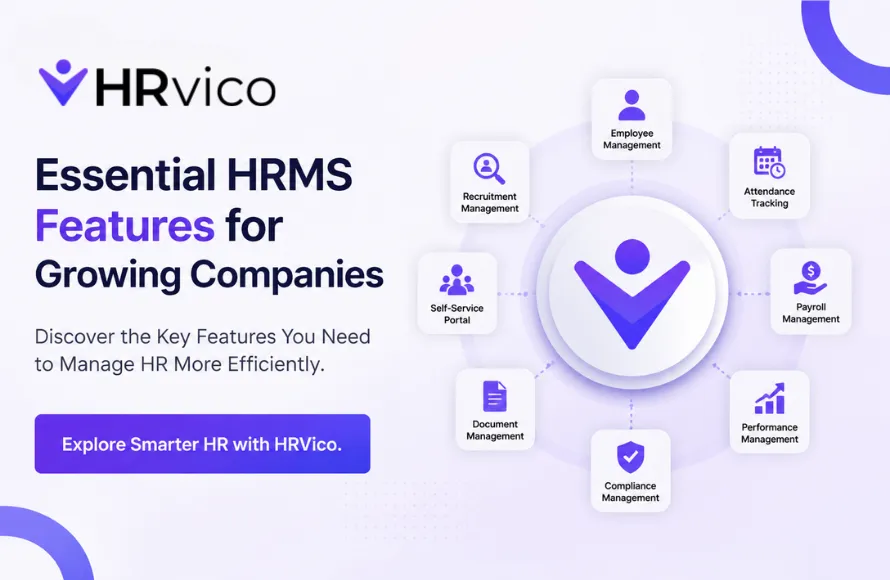
As a company grows, managing employees becomes more complex. HR teams have to handle employee records, attendance, leave requests, payroll information, approvals, reports and many other daily responsibilities. Managing all of this through Excel, emails and separate tools can quickly become time-consuming. This is why many growing businesses are moving toward HRMS software. But not every HRMS offers the same features. Before choosing an HRMS, businesses should understand which features can actually simplify HR operations and support future growth. Here are the most important HRMS features every growing company should consider. A good HRMS should provide a centralized system for managing employee information. HR teams should be able to organize important employee details, documents and employment information without maintaining multiple spreadsheets. This makes employee data easier to access, update and manage. Attendance is one of the most common HR processes that becomes difficult as a company grows. An HRMS should make it easier to track employee attendance and maintain accurate records. A digital attendance system can reduce manual entries and help HR teams spend less time maintaining attendance sheets. Managing leave requests through emails, messages or Excel can create unnecessary follow-ups. A useful HRMS should allow employees to submit leave requests digitally while managers can review and approve them through a structured process. This makes leave management more organized and transparent. Payroll involves several employee-related details and requires accurate information. An HRMS with payroll-related capabilities can help businesses organize salary information and connect relevant employee and attendance data with payroll processes. This can reduce repetitive calculations and manual work. HR should not have to handle every routine employee request. Employee self-service features allow employees to access relevant information and complete routine HR activities themselves. This can reduce the number of repetitive queries handled by HR. Growing teams often require managers to approve leave requests, attendance corrections and other employee-related requests. An HRMS should provide simple approval workflows so requests can reach the right manager and their status can be tracked easily. HR teams need accurate information to understand workforce trends and make better decisions. HRMS reporting features can help organize employee, attendance, leave and other HR data into useful reports. This is much more convenient than manually combining information from different Excel files. Automation is one of the biggest advantages of using an HRMS. Instead of repeatedly performing administrative tasks manually, businesses can automate parts of their HR workflows. This helps HR teams reduce repetitive work and focus more on employees and business needs. Employee information is sensitive and should not be accessible to everyone. A reliable HRMS should provide appropriate access controls so employees, managers and HR teams can access information according to their roles. Security should be an important consideration when comparing HRMS solutions. The HRMS you choose today should be able to support your company tomorrow. As your employee count increases, your HR requirements will also change. Choose an HRMS that can accommodate growing teams and expanding HR processes without creating unnecessary complexity. Powerful features are useful only when people can use them easily. An HRMS should have a simple and understandable interface for HR teams, managers and employees. A user-friendly system can make adoption easier and reduce the time required for training. Modern employees and managers may need access to HR information while working remotely, travelling or away from their desks. Mobile-friendly HRMS access can make activities such as attendance, leave requests and approvals more convenient. Not every company needs every possible HR feature from day one. Before selecting an HRMS, identify your current HR challenges and the processes you want to improve. Consider: ✓ What HR tasks are taking the most time? The right HRMS should solve your current problems while giving your business room to grow. For a small team, manually managing HR may seem manageable. But as employee numbers increase, repetitive administrative work can quickly become a burden. For businesses across Delhi, Noida, Greater Noida, Gurugram, Ghaziabad and Faridabad, an HRMS can help bring important HR processes into one organized system. Instead of spending hours maintaining spreadsheets and following up on routine requests, HR teams can focus more on recruitment, employee engagement, performance and business growth. HRVico helps growing businesses manage their everyday HR processes through a centralized digital platform. From employee management and attendance to leave, approvals and HR workflows, the right HR technology can make everyday HR work simpler and more organized. If your company is ready to move beyond manual HR management, explore HRVico and choose features that match your current needs and future growth.1. Employee Management
2. Attendance Management
3. Leave Management
4. Payroll Management
5. Employee Self-Service
6. Manager Approvals
7. HR Reports and Analytics
8. HR Automation
9. Data Security and Access Control
10. Scalability
11. Easy-to-Use Interface
12. Mobile Accessibility
How to Choose the Right HRMS Features
✓ Are you still depending heavily on Excel?
✓ Do managers need faster approvals?
✓ Is attendance difficult to track?
✓ Are leave requests difficult to manage?
✓ Is employee information scattered across different files?
✓ Will your workforce grow significantly in the coming years?Why Growing Companies Need an HRMS
Simplify HR Management With HRVico